

Pinnacle Child Development Clinic, 202, 2nd Floor, Kanaiya Building, Opp. Airtel Store, Linking Road, Bandra West, Mumbai - 400050


Parents are often the earliest observers of developmental differences—whether a child shows limited response to their name, finds it difficult to communicate needs, or engages in repetitive patterns of play. In India, increasing awareness and screening data indicate that approximately 1 in 100 children may be on the autism spectrum, yet many families reach specialist care only after valuable early developmental time has passed.
Dr. Rajeshwari Ganesh, a Developmental Pediatrician in Mumbai, emphasizes that progress in autism is shaped not only within therapy settings, but through consistent, meaningful interactions at home. At Pinnacle Child Development Clinic, families are supported in turning everyday routines into opportunities for learning and connection through Early Intervention Parent Training for Autism. This approach places parents at the heart of their child’s developmental journey, enabling growth through daily moments, shared experiences, and informed guidance.
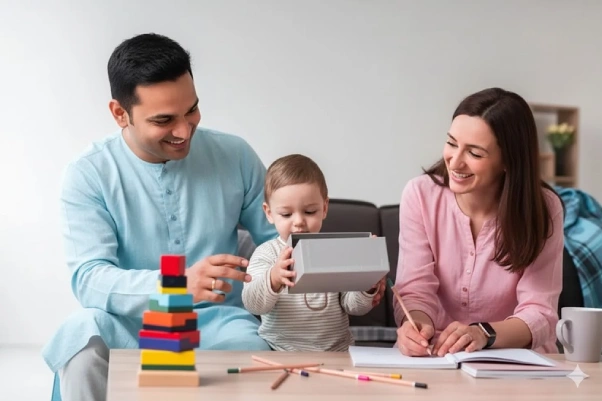
The first few years of life represent a critical phase of brain development. Neural pathways responsible for communication, attention, emotional regulation, and social interaction are rapidly forming—especially between birth and two years of age. During this period of high neuroplasticity, consistent responses from caregivers can either strengthen or limit a child’s skill development. Early intervention does not mean “doing more therapy”; it means doing the right interactions at the right time, repeatedly, in natural settings.
Traditional therapy models often focus on limited weekly appointments. While these sessions are important, they represent only a small fraction of a child’s waking hours. Children with autism learn best through repetition and predictability across environments. Parent training bridges this gap by ensuring that learning continues during meals, bathing, free play, outdoor activities, and bedtime—contexts where children are most relaxed and receptive.
Parent training is not about turning families into therapists. It is about helping parents understand how their child experiences the world and adjusting communication accordingly. Training focuses on:
These strategies reduce stress for both the child and the family while improving connection.
Parent training begins only after a detailed clinical and developmental assessment. Each child’s profile—whether borderline, mild, moderate, or severe autism—is carefully evaluated using play-based observation, parent inputs, and standardized tools such as ADOS, CARS, ISA, PEP, and developmental scales.
Training plans are loosely based on evidence-supported models like Project ImPACT, while being adapted for Indian family structures, cultural expectations, and practical realities. Parents are shown when to wait, how to respond, how to prompt communication, and how to simplify interaction—small changes that lead to significant progress.
Many parents worry about causes: screen time, parenting style, diet, or supplements. Autism is a neurodevelopmental condition, not caused by lack of affection or incorrect parenting. While excessive screen exposure can worsen interaction difficulties, it does not cause autism.
Questions about supplements such as omega-3s are common, but current scientific evidence does not support them as core autism treatments. Skill development through communication-focused interaction remains the foundation of improvement.
Autism is diagnosed through clinical assessment, structured observation, parent questionnaires, and confirmatory tools—not a single test. Once the child’s developmental profile is clear, parent training becomes precise and goal-oriented. Children with milder challenges may need subtle communication adjustments, while those with moderate to severe autism benefit from consistent, structured daily interaction strategies.
Long-term outcomes in autism depend strongly on functional communication, not only on spoken language. A child who can express needs, preferences, discomfort, or emotions—verbally or non-verbally—adapts better socially and academically. Parent training prioritizes communication in real-life situations, because daily practice cements learning far more effectively than isolated drills.
Many families—especially NRIs or parents living outside major cities—struggle with consistent access to autism services. Structured online parent training programs allow families worldwide to receive guidance on home-based interaction strategies, environment setup, and behavior support. This ensures continuity of care even when in-person therapy is not always feasible.
Parents often report early changes such as:
Equally important, parents regain confidence and feel actively involved rather than helpless observers.
Q. Can parent training start before a confirmed autism diagnosis?
Answer: Yes. Training can begin as early as 1–2 years, especially for children identified as “at risk.”
Q. Will this replace therapy sessions?
Answer: No. Parent training complements therapy and strengthens its impact.
Is parent training useful for moderate or severe autism?
Answer: Yes. Daily communication-focused interaction is essential at all severity levels.
Q. Can families outside India access this program?
Answer: Yes. Online guidance is available for NRIs and outstation families.
Q. How soon can changes be seen?
Answer: Small changes are often noticed within weeks, with steady improvement over time.
“Once we understood how to communicate with our child, daily life became easier.”
“We stopped waiting for improvement and started creating it at home.”
“Starting early changed our child’s future.”
Dr. Rajeshwari Ganesh’s work in autism care places strong emphasis on parent empowerment. She believes that when families learn how to adapt their interactions and communication styles to suit their child’s needs, progress becomes more consistent, meaningful, and sustainable in everyday life.
With over a decade of experience in Developmental & Behavioral Pediatrics, Dr. Rajeshwari Ganesh has completed advanced training through a Fellowship at the National University Hospital, Singapore, and holds MRCPCH, MD Pediatrics, DCH, and MBBS qualifications. She is among a select group of professionals in India certified to administer ADOS and Bayley Scales, which are internationally recognized gold standards in developmental assessment.
Her areas of special expertise include autism intervention planning, parent training and empowerment, and developmental monitoring of high-risk and NICU graduates, with a strong focus on early identification, practical guidance, and family-centered care.
At Pinnacle Child Development Clinic, care is designed to be calm, child-friendly, and family-centered. The clinic integrates assessment, parent training, and long-term developmental monitoring under one roof, focusing on clarity, continuity, and realistic goal-setting—supporting both local and international families.
Early intervention parent training shifts autism care from occasional therapy sessions to daily meaningful interaction. When parents are empowered early, children receive consistent support during the most critical years of brain development. With the right guidance, structure, and collaboration, children on the autism spectrum can achieve lasting progress—one everyday interaction at a time.
Pinnacle Child Development Clinic, 202, 2nd Floor, Kanaiya Building, Opp. Airtel Store, Linking Road, Bandra West, Mumbai – 400050
📞 +91 77000 58024
📧 ganesh.ramaa@gmail.com
🌐 https://www.drrajeshwariganesh.com
🕒 Open: 24×7 × 365 Days
Copyright © 2023 | Dr. Rajeshwari Ganesh.