

Pinnacle Child Development Clinic, 202, 2nd Floor, Kanaiya Building, Opp. Airtel Store, Linking Road, Bandra West, Mumbai - 400050


Many parents seek an IQ test for children when their child struggles in school, shows attention difficulties, or appears to develop differently compared to peers. Dr. Rajeshwari Ganesh, a Developmental & Behavioral Pediatrician, often helps families understand that IQ testing is not meant to label a child or predict success or failure.
Instead, a well-conducted IQ assessment is a scientific tool that provides insight into how a child thinks, learns, remembers, and processes information. When interpreted correctly, it helps identify strengths, areas of difficulty, and the type of support a child may need at the right time.
In India, an estimated 8–10% of children experience developmental, behavioural, or learning challenges, many of which are identified later than ideal. A comprehensive IQ test combined with a developmental assessment enables early identification, targeted intervention planning, and significantly better long-term academic and emotional outcomes for children.
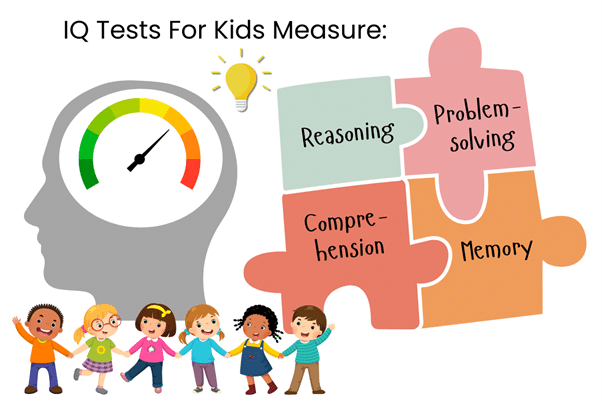
IQ testing is a standardized evaluation of intellectual functioning. It assesses multiple brain-based skills, including verbal reasoning, logical thinking, working memory, attention, and processing speed.
IQ testing does not measure creativity, emotional intelligence, talent, or future success. Instead, it provides a cognitive profile that helps explain why a child may be thriving in certain areas while struggling in others.
IQ scores alone are rarely sufficient to understand a child’s difficulties. Cognitive performance is influenced by language development, emotional regulation, attention, early brain development, and environmental factors.
For this reason, IQ testing should always be integrated with:
A comprehensive approach ensures accurate diagnosis and avoids mislabeling or inappropriate expectations.
Developmental or cognitive testing should be considered if a child shows:
Standardized IQ testing is usually reliable from 5 years onward, while developmental assessments can begin in infancy.
At Pinnacle Child Development Clinic, developmental and cognitive assessments are conducted using standardized, evidence-based tools. Each test is selected based on the child’s age, concerns, and clinical findings to ensure accurate diagnosis and meaningful guidance.
WISC (Wechsler Intelligence Scale for Children)
A widely used international IQ test for children aged 5 to 16 years. It assesses verbal comprehension, reasoning ability, working memory, and processing speed, providing a detailed cognitive profile.
Malin’s Intelligence Scale
An Indian-standardized intelligence test adapted for local language and cultural contexts. It is particularly useful for children educated in Indian school systems.
Psychoeducational Assessment
This combines IQ testing with academic skill evaluation to understand whether learning difficulties arise from cognitive challenges or specific learning disorders.
Woodcock–Johnson Tests
A standardized assessment of reading, writing, mathematics, and cognitive processing. It is essential for diagnosing learning disorders and planning school accommodations.
ADOS (Autism Diagnostic Observation Schedule)
A structured, play-based observational assessment considered the gold standard for autism diagnosis worldwide. It evaluates communication, social interaction, and behavior.
CARS (Childhood Autism Rating Scale)
A behavior-based scale that helps determine autism severity, ranging from borderline to severe, aiding therapy and prognosis planning.
Indian Scale for Assessment of Autism (ISA)
A nationally recognized autism assessment often required by Indian schools and institutions for certification and educational planning.
Psycho-Educational Profile (PEP)
Used primarily for children with autism, this test focuses on developmental strengths and weaknesses to guide individualized intervention.
Capute Scales
Early developmental screening tools for infants and toddlers that assess cognitive and language development before formal IQ testing is possible.
Amiel–Tison Neurological Assessment
A neurological evaluation focusing on tone and motor development, particularly valuable for infants with birth complications or prematurity.
Bayley Scales of Infant and Toddler Development
An internationally accepted assessment for children aged 1 to 42 months, evaluating cognition, language, and motor development.
Early Start Denver Model (ESDM) Curriculum
An early intervention framework for young children with autism that emphasizes communication, social engagement, and parent involvement.
PEER, PEERAMID, and PEEX2
Neurodevelopmental assessments used for monitoring cognitive and behavioral development in preterm infants and children at high developmental risk.
The brain is most adaptable in the first two years of life. Identifying developmental delays during this period allows targeted intervention when outcomes are most favorable. Early assessment can reduce the severity of autism, ADHD, learning disorders, and motor or cognitive impairments.
Children born preterm or requiring NICU care benefit especially from structured developmental monitoring.
A developmental pediatrician integrates medical knowledge with behavioral science to interpret assessments accurately. Beyond diagnosis, the role includes guiding families, coordinating therapies, training parents, and monitoring long-term developmental progress.
Communication ability, functional independence, and emotional regulation are critical indicators of long-term outcome—often more important than IQ score alone.
Parents who needs an assessment are often looking for far more than a test or a diagnosis. They usually arrive with anxiety, confusion, and a strong need for clarity about their child’s development. Families choose Dr. Rajeshwari Ganesh because her approach goes beyond scores and labels, focusing instead on understanding the whole child—their strengths, challenges, and real-world functioning.
Dr. Rajeshwari Ganesh is a Developmental and Behavioral Pediatrician with formal medical qualifications including MBBS, DCH, MD Pediatrics, and MRCPCH, along with advanced fellowship training in Developmental and Behavioral Pediatrics from the National University Hospital, Singapore. Her training allows her to integrate strong core pediatrics with structured, evidence-based developmental assessment.
Her clinical practice is dedicated exclusively to children with developmental delays, autism spectrum conditions, ADHD, learning disorders, and cognitive or behavioral concerns. Each assessment is grounded in careful clinical observation, standardized testing, and a detailed review of the child’s medical, developmental, and educational history.
Dr. Rajeshwari Ganesh places particular emphasis on early identification, especially in young children and preterm infants, recognizing that early brain development is highly sensitive and responsive to timely intervention. Equal importance is given to parent understanding—ensuring families are clear about both the diagnosis and the steps ahead.
Her role extends well beyond delivering a written report. She actively guides families on which interventions truly matter, how to prioritize next steps, and what may be unnecessary or avoidable. Her approach is clear, honest, and evidence-based, with the goal of improving a child’s day-to-day functioning while helping parents feel confident and informed about the path they are choosing.
“At Pinnacle Child Development Clinic, families come because they are seeking careful, structured, and personalized developmental care. The clinic is designed specifically for developmental and cognitive assessments, ensuring that children are evaluated in a calm, child-friendly environment rather than a rushed or crowded setting.
Assessments at the clinic follow a systematic process. Standardized international tools are combined with detailed clinical observation and meaningful parent input. No child is assessed based only on test scores. Equal importance is given to real-life skills such as communication, attention, behavior, emotional regulation, and learning ability.
Another reason families choose the clinic is our emphasis on clarity and guidance. Parents leave with a clear understanding of their child’s developmental profile and practical next steps, rather than ambiguity or generic recommendations. Special attention is given to younger children, preterm infants, and those with high developmental risk, as early support during these stages can significantly change long-term outcomes.
The clinic’s philosophy is simple: accurate assessment, clear communication, and individualized planning — always keeping the child and family at the center.”
Q. When should a child undergo an IQ assessment?
Answer: An IQ test for children is usually recommended when there are concerns about learning, attention, academic performance, or overall cognitive development.
Q. Is IQ testing stressful for children?
Answer: No. IQ testing is conducted in a child-friendly manner using structured, interactive tasks appropriate to the child’s age.
Q. Can an IQ test alone diagnose developmental conditions?
Answer: N o. IQ testing is most effective when combined with a comprehensive developmental and behavioral evaluation.
Q. Is IQ testing useful for school-related concerns?
Answer: Yes. It helps identify learning patterns and supports academic planning, school accommodations, and intervention strategies.
Q. Can early assessment make a difference?
Answer: Yes. Early identification allows timely support, which can significantly improve learning, communication, and confidence.
“The assessment helped us understand why our child was struggling in school. The explanation was clear and reassuring.”
“We finally received clarity instead of confusion. The evaluation helped us take the right next steps early.”
“Early developmental assessment made a big difference. We are grateful we did not delay seeking help.”
A comprehensive IQ test for children, combined with developmental assessment, helps identify learning, attention, and communication concerns early. Timely evaluation allows appropriate support that can positively impact academic performance, confidence, and long-term development.
For expert assessment and guidance in Mumbai, consult Dr. Rajeshwari Ganesh. Book an appointment to better understand your child’s developmental needs.
Pinnacle Child Development Clinic, 202, 2nd Floor, Kanaiya Building, Opp. Airtel Store, Linking Road, Bandra West, Mumbai – 400050
📞 +91 77000 58024
📧 ganesh.ramaa@gmail.com
🌐 https://www.drrajeshwariganesh.com
🕒 Open: 24 × 7 × 365 Days
Copyright © 2023 | Dr. Rajeshwari Ganesh.