

Pinnacle Child Development Clinic, 202, 2nd Floor, Kanaiya Building, Opp. Airtel Store, Linking Road, Bandra West, Mumbai - 400050


When Words Know What to Say but Struggle to Come Out
Many parents first become aware of stammering during everyday moments—when a child is eagerly sharing a story, asking for something they want, or trying to express thoughts faster than words can come out. In India, estimates suggest that 6–8% of young children experience a phase of stammering as speech and language skills are developing. For some families, this phase resolves naturally; for others, it becomes a source of worry, confusion, and concern about the child’s future communication.
It is important to understand that stammering is not caused by anxiety, poor parenting, or low intelligence. Instead, it often reflects a temporary mismatch between the speed of a child’s thoughts and the developing coordination of speech muscles. When this is understood early, the way adults respond changes—creating a more supportive environment that reduces pressure, builds confidence, and significantly improves long-term communication outcomes.
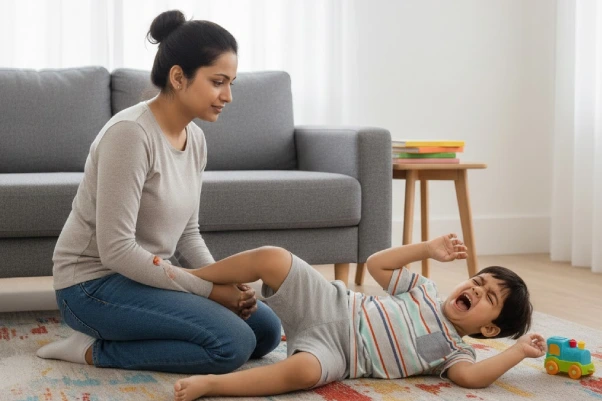
Stammering, also known as stuttering, is a difference in the flow and rhythm of speech. It can appear suddenly or gradually, most commonly between 2 and 5 years of age, when language development accelerates rapidly.
Globally, nearly 80 million people live with a stammer, and many first experience it in early childhood. For most children, early stammering is developmental and temporary, especially when handled calmly and supportively.
Stammering does not look the same in every child. It may include:
Some children also change how they speak—or avoid speaking altogether—to hide their stammer. This is why emotional safety is just as important as speech support.
Young children’s brains develop language faster than their speech motor system can execute it. When ideas rush ahead of articulation skills, fluency breaks down.
Factors that may increase stammering include:
Stammering is not a reflection of intelligence or understanding.
Children are often aware when their speech sounds different. If reactions from adults or peers include correction, interruption, or visible worry, children may begin to feel self-conscious.
Some children:
Creating a safe, accepting speaking environment at home and school protects confidence and emotional well-being.
Small changes in daily interaction make a powerful difference:
Children who stammer often respond positively to calm structure and emotional security.
Well-meaning responses can unintentionally increase anxiety. Try to avoid:
These actions increase pressure and may worsen fluency.
While many children outgrow early stammering, professional guidance is advised if:
Early assessment helps determine whether monitoring, speech therapy, or combined developmental support is needed.
The goal of intervention is not just smoother speech, but confident communication. Therapy focuses on creating environments where children feel safe to express themselves without fear of interruption or judgment.
With the right guidance, most children either outgrow stammering or learn to manage it confidently.
Q. Is stammering normal in young children?
Anwer: Yes, especially between 2–5 years.
Q. Does stammering mean my child is anxious?
Anwer: No. Anxiety may increase stammering, but it does not cause it.
Q. Should I correct my child’s speech?
Anwer: No. Focus on listening, not correcting.
Q. Will my child outgrow stammering?
Anwer: Many children do, especially with supportive environments.
Q. When should I seek professional help?
Anwer: If stammering persists, worsens, or affects confidence.
“Once we stopped interrupting and slowed our own speech, our child became more confident.”
“Understanding that stammering is developmental reduced our fear.”
“Guidance helped us support speech without pressure.”
With over a decade of experience, Dr. Rajeshwari Ganesh is a trusted Developmental and Behavioral Pediatrician in Mumbai, known for her calm, empathetic, and evidence-based approach.
She has completed advanced fellowship training in Developmental & Behavioral Pediatrics from the National University Hospital, Singapore, and holds internationally recognized qualifications including MRCPCH, MD Pediatrics, DCH, and MBBS from Mumbai University.
Her work includes detailed developmental and behavioral evaluations using globally accepted tools such as Capute Scales, Amiel-Tison Scales, PEP, Early Start Denver Model Curriculum, CARS, and advanced neurodevelopmental assessments like PEER, PEERAMID, and PEEX2.
Dr. Rajeshwari Ganesh is among the few professionals in India certified to administer ADOS (Autism Diagnostic Observation Schedule) and the Bayley Scales of Infant and Toddler Development, considered gold standards worldwide.
Stammering is not a flaw—it is a developmental variation that deserves patience, understanding, and respect. When children feel heard rather than hurried, confidence grows and communication flourishes. Early supportive guidance ensures that speech differences do not limit a child’s voice, expression, or self-belief.
Pinnacle Child Development Clinic, 202, 2nd Floor, Kanaiya Building, Opp. Airtel Store, Linking Road, Bandra West, Mumbai – 400050
📞 +91 77000 58024
📧 ganesh.ramaa@gmail.com
🌐 https://www.drrajeshwariganesh.com
🕒 Open: 24×7 × 365 Days
Copyright © 2023 | Dr. Rajeshwari Ganesh.