

Pinnacle Child Development Clinic, 202, 2nd Floor, Kanaiya Building, Opp. Airtel Store, Linking Road, Bandra West, Mumbai - 400050


When parents walk into the clinic with concerns like, “My child moves differently… is it something serious?” there is often deep fear and uncertainty behind the question. Dr. Rajeshwari Ganesh, a Developmental & Behavioral Pediatrician in Mumbai, regularly helps families navigate these concerns through careful evaluation, clear communication, and evidence-based guidance.
In India, studies estimate that 3–4 children per 1,000 births are affected by Cerebral Palsy (CP). Yet most families realise something is different only when movement doesn’t look natural or milestones come much later. Early guidance and therapy have been shown to significantly improve posture, balance, speech and overall functioning, which is why many parents now opt for Cerebral Palsy Treatment in Mumbai, India without waiting.
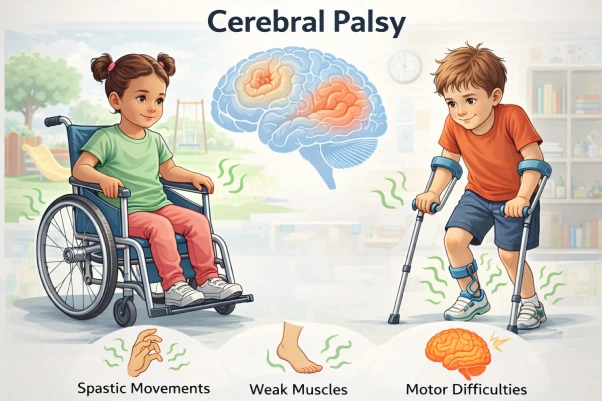
Cerebral Palsy is a condition caused by an early injury to the developing brain, affecting a child’s ability to control movements smoothly. The condition does not worsen over time, but without timely therapy, stiffness or weakness may affect day-to-day functioning.
Children may experience:
Every child’s pattern is different, which is why treatment plans must be personalised.
Many parents describe similar early signs:
These early observations are often the starting point for seeking Cerebral Palsy Treatment in Mumbai, India.
Dr. Rajeshwari Ganesh is a Developmental & Behavioral Pediatrician in Mumbai who believes that understanding a child begins well before formal assessment tools are introduced. Her approach emphasizes careful observation, patience, and insight into each child’s natural responses and abilities.
She began her medical journey at Mumbai University, completing both her MBBS and Diploma in Child Health (DCH), before advancing into pediatric specialization through the MD Pediatrics (USAIM) program. Her academic training was further strengthened through the internationally respected MRCPCH pathway, reinforcing a strong clinical foundation in pediatrics.
Driven by a deeper interest in developmental medicine, Dr. Rajeshwari Ganesh pursued advanced training at the National University Hospital, Singapore, where she completed a Fellowship in Developmental & Behavioral Pediatrics. This training provided extensive exposure to early brain development, movement disorders, learning differences, and comprehensive developmental assessment.
Thoughtful Observation-Led Evaluations
In clinical practice, Dr. Rajeshwari Ganesh places strong emphasis on observing how a child sits, reaches out, responds to touch, and communicates. These subtle behaviors often reveal important developmental cues. Standardized developmental tools are used not to label children, but to understand them more deeply and guide therapy in the most appropriate direction.
Her evaluation style is known for its clarity, child comfort, and practical guidance, helping families move forward with confidence, understanding, and realistic expectations.
A developmental assessment is never rushed. It involves:
The goal is not only to diagnose but to guide families toward the Cerebral Palsy Best Treatment plan for their child.
Therapy Options That Help Children Progress
Children with CP benefit from structured, consistent therapy plans designed around daily challenges.
Movement Training Through Physiotherapy
Helps improve posture, coordination, flexibility, walking patterns, and overall mobility.
Occupational Therapy for Everyday Tasks
Supports feeding, dressing, writing, sitting posture, and use of both hands effectively.
Speech, Swallowing & Feeding Assistance
Useful for children who struggle with clarity, chewing, or safe swallowing.
Early Developmental Programs
Promote communication, social engagement, play skills, and early learning abilities.
Supportive Devices (Only When Needed)
Walkers, orthotics, splints, or seating aids may help improve positioning and comfort.
Together, these therapies form the core of the Cerebral Palsy Best Treatment approach.
Parents often express that meeting Dr. Rajeshwari Ganesh feels like a turning point. What they appreciate is:
A calm, reassuring conversation style
She simplifies medical terms and explains what is happening without alarming families.
Children respond well to her gentle assessment approach
Her sessions feel like guided play rather than tests.
Her plans are structured but realistic
Therapy suggestions consider the child’s comfort and the family’s routine.
She brings both science and warmth to consultations
Families feel emotionally supported, not overwhelmed.
She sees the child beyond the diagnosis
Strengths, abilities, and potential are given importance along with delays.
Q. Can children with CP improve over time?
Answer: Yes. With early and regular therapy, most children show steady progress.
Q. Is CP caused by parents or genetics?
Answer: No. It is usually due to early brain injury or complications around birth.
Q. How soon should we start therapy?
Answer: Therapy should begin as soon as CP is suspected.
Q. Can children with CP attend regular school?
Answer: Many children do — depending on the type and severity of CP.
Q. Does CP affect intelligence?
Answer: Not always. Movement difficulty does not automatically mean cognitive difficulty.
“We finally understood our child’s walking pattern after her evaluation. The therapy plan worked beautifully.”
“Her explanations made us feel prepared and hopeful. My son’s balance improved within months.”
“Very knowledgeable and kind. Our daughter responds so well to her.”
Cerebral Palsy affects movement, but it does not take away a child’s ability to learn, grow, adapt, and thrive. Early recognition and therapy make a powerful difference in helping children gain balance, strength, communication skills, and confidence.
More families today choose early Cerebral Palsy Treatment in Mumbai, India to ensure their children receive structured support. With her refined clinical skills, years of developmental experience, and child-friendly approach, Dr. Rajeshwari Ganesh remains a trusted name for families seeking the Cerebral Palsy Best Treatment for their children.
Pinnacle Child Development Clinic, 202, 2nd Floor, Kanaiya Building, Opp. Airtel Store, Linking Road, Bandra West, Mumbai – 400050
📞 +91 77000 58024
📧 ganesh.ramaa@gmail.com
🌐 https://www.drrajeshwariganesh.com
🕒 Appointments available all days
Copyright © 2023 | Dr. Rajeshwari Ganesh.